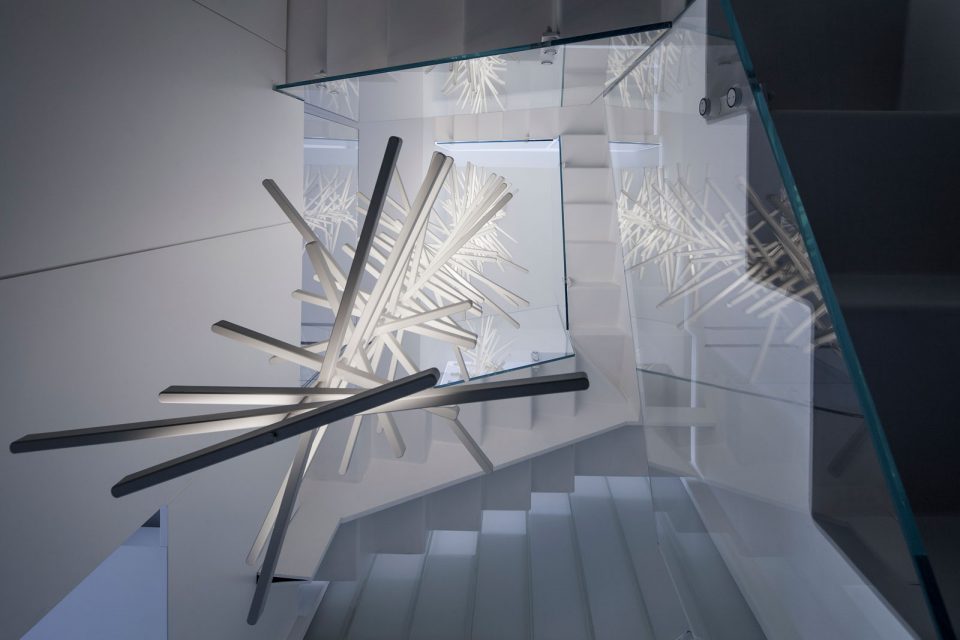
A tall room still needs light at human height. Use one vertical gesture to connect the volume, then support landings, walls, and tasks with quieter layers.
Give the vertical space one clear gesture
A multi-drop pendant or chandelier can connect several levels visually, but it should relate to the stair void or furniture below—not float in the geometric centre by default.
Draw the lowest and highest points in elevation. The composition should read from the main approach as well as from upper landings.
Bring light back to human height
Wall lights at landings, picture lights, and lamps in the entry prevent the scheme from existing only overhead. These lower sources also soften faces and make the lower level feel inhabited.
Use shielded fittings where the lamp would otherwise be visible from above or below through the stair void.
Use shadow to describe the architecture
Grazing light can reveal plaster, stone, and handrails; diffuse light makes the whole volume calmer. Choose one or two surfaces to emphasize rather than washing every wall equally.
Coordinate the beam with artwork and balustrades so shadows look intentional.
Design for installation and maintenance
Long drops need suitable support, stable suspension, and careful on-site adjustment. Confirm access for cleaning, driver replacement, and lamp changes before the scaffold is removed.
In difficult voids, long-life integrated light sources are useful only when the driver and components remain serviceable. Ask how each part can be replaced.